
If you’re looking for something to carry for your safety, it helps to know what the law allows. In Australia, most items sold overseas for self-defence are illegal to carry here, and carrying one can mean a criminal charge even if you never use it. This guide explains what you can legally carry in each state and territory, and what to leave at home.
This is general information, not legal advice. Weapons laws differ between states and territories and can change, so check with your local police if you’re unsure.
Table of Contents
Quick answer: what’s legal to carry for self-defence?
| Item | Legal to carry for self-defence? |
|---|---|
| Personal safety alarm | Yes, in every state and territory, with no permit |
| Torch | Yes |
| Whistle or air horn | Yes |
| Phone Emergency SOS and safety apps | Yes |
| Pepper spray | No in most of Australia. Legal in WA with reasonable grounds, and on trial in the NT until 31 December 2026 |
| Taser or stun gun | No. A prohibited weapon almost everywhere |
| Knife | No. Carrying a knife in public without a lawful excuse is an offence, and self-defence generally doesn’t count |
| Knuckle dusters, batons and extendable batons | No. Prohibited or controlled weapons in most states |
| Self-defence keyrings (kubotans, spiked or “cat ear” keyrings) | A grey area. Anything designed to hurt someone can be treated as a weapon |
Why are most self-defence weapons illegal in Australia?
Australian weapons laws are set by each state and territory, but they share the same idea: carrying something designed to hurt people is treated as risky, even when your reason is self-defence. Most states have lists of prohibited or controlled weapons, and wanting to protect yourself usually isn’t accepted as a reason to carry one.
Self-defence law still applies if you’re attacked: you’re allowed to use reasonable force to protect yourself. But that’s different from carrying a weapon every day “just in case”, which is where most people get into trouble.
Pepper spray laws by state
Pepper spray (also called OC or capsicum spray) is the item Australians ask about most. In short:
- Western Australia: legal as a controlled weapon if you have reasonable grounds to carry it
- Northern Territory: legal for eligible adults during a public trial, extended to 31 December 2026
- NSW, Victoria, Queensland, South Australia, Tasmania and the ACT: illegal for self-defence, with penalties up to jail time
For the details and penalties in each state, see Safe-Life’s guide: Is pepper spray illegal in Australia?.
Tasers, stun guns and knives
Tasers and stun guns are prohibited weapons in almost every Australian jurisdiction. Be wary of products sold online as “stun torches” or similar, which are usually treated the same way.
Every state and territory makes it an offence to carry a knife in a public place without a lawful or reasonable excuse, such as work or a recreational activity like fishing. Self-defence generally isn’t accepted as an excuse.
Self-defence keyrings
Kubotans, spiked keyrings and “cat ear” keyrings are sold widely online, but they sit in a legal grey area. Because they’re designed to strike someone, police can treat them as weapons. A keyring with a personal alarm on it is a safer choice, because its job is to make noise and draw attention, not to hurt anyone.
What you can legally carry
These options are legal everywhere in Australia:
- A personal safety alarm. Pull the pin and it sounds a loud siren to startle an attacker and get the attention of people nearby. No permit, and you can carry it anywhere, including at work, at uni and when you travel interstate.
- A torch to light your way and help you see what’s around you.
- A whistle or air horn, as simple backups.
- Your phone’s Emergency SOS, which can call emergency services and share your location. Set it up before you need it.
- A safety app that shares your location with family or friends when you’re out.
- Self-defence training, which builds confidence and teaches you how to get away safely.
How a Chirpie personal alarm helps
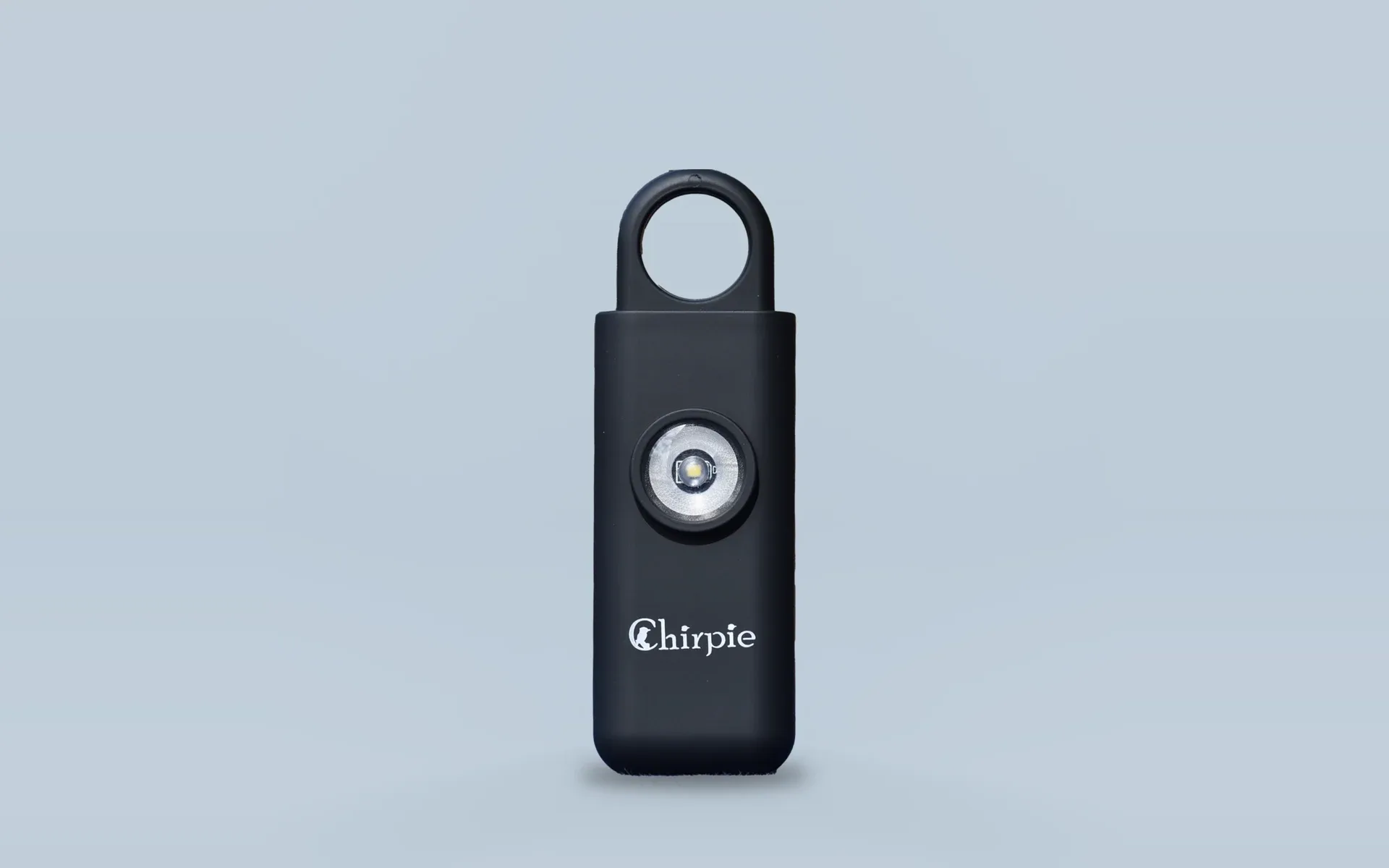
Every Chirpie has a siren rated 130 dB and a flashing strobe, and clips onto your keys or bag so it’s always within reach. Pull the pin and the alarm starts straight away; push it back in to stop it. Chirpie alarms are built to “police-approved” specs and are legal to carry anywhere in Australia.
- The Chirpie Original is our simplest, lowest-cost alarm, with coin batteries.
- The Chirpie Infinity is rechargeable and adds a torch.
- The Chirpie Link can also trigger your phone’s Emergency SOS, depending on your phone.
Which Chirpie is right for you? compares all five models.
Frequently asked questions
Is a personal alarm legal to carry in Australia?
Yes. Personal safety alarms are legal to carry in every state and territory, and you don’t need a permit.
Can I carry pepper spray for self-defence?
Only in Western Australia (with reasonable grounds) and, during its trial, the Northern Territory. Everywhere else it’s illegal to carry for self-defence.
Can I carry a knife for protection?
No. Carrying a knife in public without a lawful excuse is an offence in every state and territory, and self-defence generally isn’t accepted as an excuse.
Are self-defence keychains legal?
Keychains designed to strike someone, such as kubotans and spiked keyrings, can be treated as weapons, so it’s best to avoid them. A personal alarm keyring is legal everywhere.
This article is general information about Australian law and isn’t legal advice. Laws change, so check the current rules with your state or territory police.